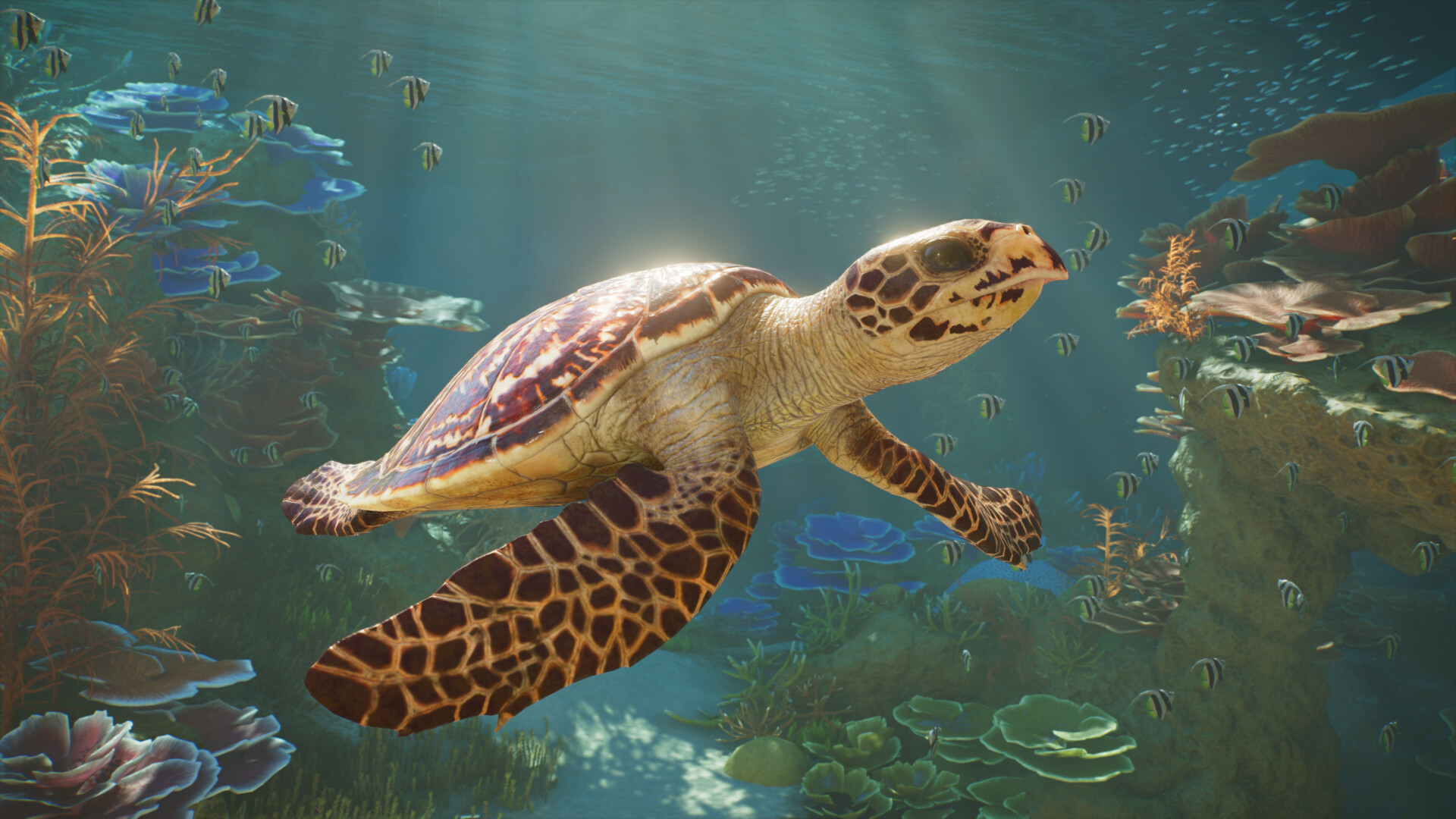
Build a closed glass water barrier loop, wire it to a power network, place Water Filters configured for the right salinity, add enrichment, then adopt and release the fish from Animal Storage. Heavier reinforced glass resists leaks.
On this page
How to build a Planet Zoo 2 aquarium
Lay the water barrier loop
Lay a contained loop of glass water barriers around the future tank footprint. The closed loop is what registers the aquarium as a valid habitat; an open loop is treated as no habitat at all.
Add the staff gate and power
Add a staff gate and the power network connection so the staff gate, lighting, and filter network can be wired up.
Place and configure the Water Filters
Place the Water Filters around or attached to the aquarium. Each Water Filter must be configured to supply the correct water type (fresh, salt, or brackish) for the species inside.
Add underwater enrichment
Place underwater foliage, rocks and coral as enrichment. Fish AI uses these as grazing surfaces and cover.
Set per-tank parameters
Set salinity, target temperature, and per-tank settings in the aquarium overview panel, including the per-species water depth and the per-species preferred column.
Adopt and release
Adopt the fish from the Animal Trading menu and release them from Animal Storage.
Salinity, temperature, and the filter network
- Salinity
- A saltwater species cannot survive in freshwater and vice versa. Salinity is configured per Water Filter, and the filter network must match the species inside the aquarium.
- Temperature
- Set per aquarium via the staff gate and the habitat lighting. Cold-sensitive species need a heater on a maintained power network, since Planet Zoo 2 introduces seasons on a 60-real-time-minute year.
- Cleanliness
- Maintained by the filter network, but staff must also suit up in wetsuits and dive in to manually scrub algae from the glass when viewing windows get dirty. Dirty glass both hurts guest visibility and raises disease risk.
Staff needed to run a Planet Zoo 2 aquarium
The staff panel for a Planet Zoo 2 aquarium needs three role types inside one Work Zone: vets and caretakers for welfare diagnosis and animal moves to Animal Storage; Maintenance Staff with wetsuits for algae-grassing duty, leak inspection, and filter upkeep; educators and security for education talks at the aquarium viewpoint and guest safety near the underwater viewing tunnel. Assign staff to short Work Zones that overlap both the aquarium and the Animal Trade Centre; staff quit if their zone is too large or pays too little, and a staff collapse inside an aquarium cuts welfare across salinity, temperature, and cleanliness at once.
Animal AI, behaviour, and welfare in Planet Zoo 2 aquariums
The Planet Zoo 2 aquarium AI follows the species' preferred column rather than the surface. Fish navigate the full water column around rocks, coral, plants and the floor. Shoaling species such as Pacific Sardine and Schooling Bannerfish move as a single group entity with flocking that packs tighter around predators. Sharks exhibit window surfing because they must keep swimming to breathe, so flat glass is inadequate for species like the Blacktip Reef Shark and Great Hammerhead. Large individual species have detailed welfare AI that tracks water column use, depth preferences, and feeding cycles. Feeding comes from auto-generated free-floating feeders placed by staff and from underwater foliage that species can graze on.
Maintenance to keep Planet Zoo 2 aquarium welfare high
Three maintenance rules keep a Planet Zoo 2 aquarium stable across seasons. Heavier barrier materials resist cracks better: use reinforced glass for tanks over a million litres to avoid leaks. Schedule regular keeper inspections; habitats degrade over time, and neglected aquarium barriers can crack and spring a leak. Vertical design beats footprint: multistory or subterranean aquariums with underwater guest tunnels, one-way glass, and concave or convex walls are supported, and water colour tone is customisable. Building downward gives species more column depth for the same plan area.