Around 121 confirmed species at launch across four habitat types, plus 6 Deluxe-exclusive additions and a Zoopedia that drives placement and welfare decisions for every animal.
On this page
Planet Zoo 2 terrestrial animals at launch
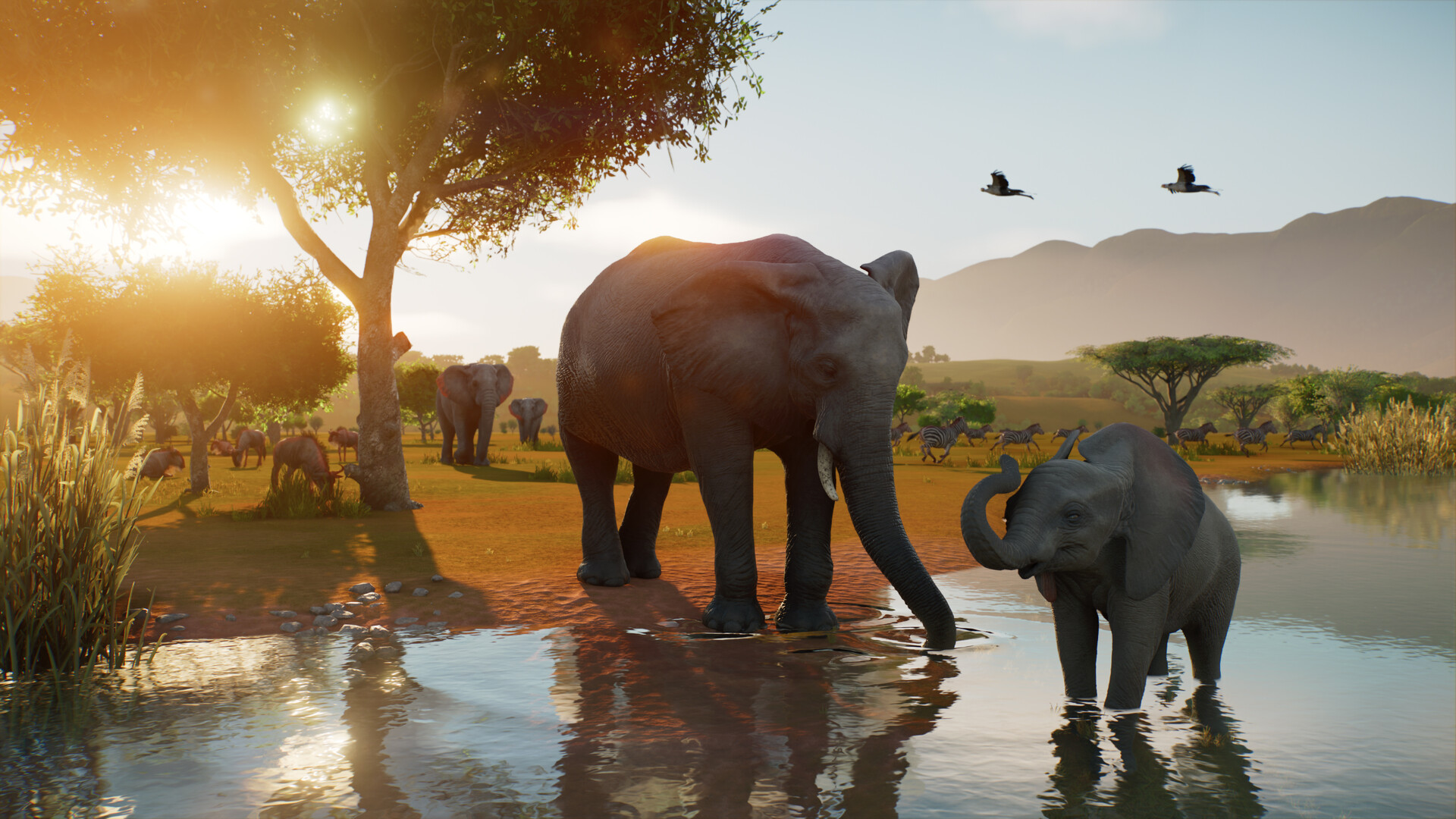
Confirmed Planet Zoo 2 terrestrial species at launch include the Lion, West African Lion, Sumatran Tiger, African Savannah Elephant, Asian Elephant, Masai Giraffe, Reticulated Giraffe, Common Hippopotamus, Plains Zebra, Gemsbok, Blue Wildebeest, Black Wildebeest, Springbok, Thomson's Gazelle, Cape Buffalo, Common Warthog, Sable Antelope, Nyala, Saltwater Crocodile, Gharial, Nile Monitor, Spotted Hyena, African Wild Dog, African Leopard, Grey Wolf, Eurasian Brown Bear, Eurasian Beaver, Eurasian Lynx, European Bison, Przewalski's Horse, Red Deer, Mountain Hare, Giant Panda, Red Panda, Goodfellow's Tree-Kangaroo, Sumatran Orangutan, Western Lowland Gorilla, Western Chimpanzee, Sun Bear, North Sulawesi Babirusa, Malayan Tapir, Siamang, Ring-Tailed Lemur, Asian Small-Clawed Otter, Sunda Pangolin, Meerkat, Grizzly Bear, Galapagos Giant Tortoise and Western Diamondback Rattlesnake. Terrestrial species share the standard barrier loop and use the welfare check that combines grade, height, terrain, social group, and enrichment.
Planet Zoo 2 flying (aviary) animals at launch
Confirmed Planet Zoo 2 flying species at launch include the Toco Toucan, Great Hornbill, Secretarybird, White-Tailed Sea Eagle, Golden Eagle, Eurasian Bittern, Greater Flamingo, Javan Green Magpie, Long-Eared Owl, Shoebill and White-Backed Vulture. Aviary species share the same barrier loop as terrestrial habitats but require a roof, and welfare is driven by the flyable area value rather than the surface footprint.
Planet Zoo 2 aquarium animals at launch
Confirmed Planet Zoo 2 aquarium species at launch include Blacktip Reef Shark, Great Hammerhead, Hawksbill Turtle, Ocean Sunfish, Humphead Wrasse, Blackspotted Puffer, Brown Trout, Pacific Sardine, Palette Surgeonfish, Yellow Tang, Clown Anemonefish, Clown Triggerfish, Clown Loach, Pacific Bluefin Tuna, Sailfin Snapper, Boeseman's Rainbowfish, Common Rudd, African Tigerfish, Indo-Pacific Sergeant, Blue and Gold Fusilier, Indian Ocean Oriental Sweetlips, Indo-Pacific Leopard Shark, Longfin Batfish, Giant Gourami, Giant Grouper, Blunthead Cichlid, Golden Trevally, Red Lionfish, Ocellated Eagle Ray, Javanese Cownose Ray, Bluespine Unicornfish, Schooling Bannerfish, Spotted Eagle Ray, West Indian Manatee and Pennant Coralfish. Aquarium species run on the salinity, temperature and cleanliness welfare parameters, with depth preferences from surface cruise (Blacktip Reef Shark) to deep-water (Great Hammerhead).
Planet Zoo 2 exhibit species at launch
Planet Zoo 2 exhibit species are the small animals kept in walk-through exhibits. Confirmed exhibit species include Axolotl, Fire Salamander, Danube Crested Newt, American Bullfrog, Giant Slippery Frog, Golden Poison Frog, Lehmann's Poison Frog, Red-Eyed Tree Frog, Boa Constrictor, Yellow Anaconda, Desert Horned Viper, Eastern Brown Snake, Gila Monster, Mexican Redknee, Giant Forest Scorpion, Amazonian Giant Centipede, Giant Malaysian Leaf Insect, Giant Tiger Land Snail, Goliath Beetle, Sacred Scarab Beetle, European Peacock, Cloudless Sulphur, Common Bluetongue and Moon Jelly. Exhibits use walk-through glass-front enclosures and run on a small-animal welfare check.
What every Planet Zoo 2 Zoopedia entry contains
Each Planet Zoo 2 zoopedia entry includes the species-specific layer the player needs to lock in placement and welfare: habitat type and per-species terrain preference (short vs tall grass, rock, dirt, sand, snow); barrier grade and minimum height, plus a climb-proof toggle for the 12 climb-prone species; water depth or flyable area, whichever applies; temperature tolerance and heater requirements; social group size and pair-bonding preferences, including which species can cohabit; diet and food source, including the auto-generated free-floating feeders that staff place; family tree view for the individual animal, showing parents, offspring and grandparents across generations, plus welfare indicators; enrichment items unlocked by research, including the optional Prospering state that requires research into the species' wild needs. The Zoopedia is opened from any animal's info card and is the single source of truth for the species-specific layer. Reading the Zoopedia entry before locking in placement is the fastest way to avoid welfare problems across the launch roster.