Four habitat types, five families of requirements. Build a closed barrier loop first, configure staff gates and food, then add per-species terrain, water, and temperature settings before adopting any animal.
On this page
The four Planet Zoo 2 habitat types
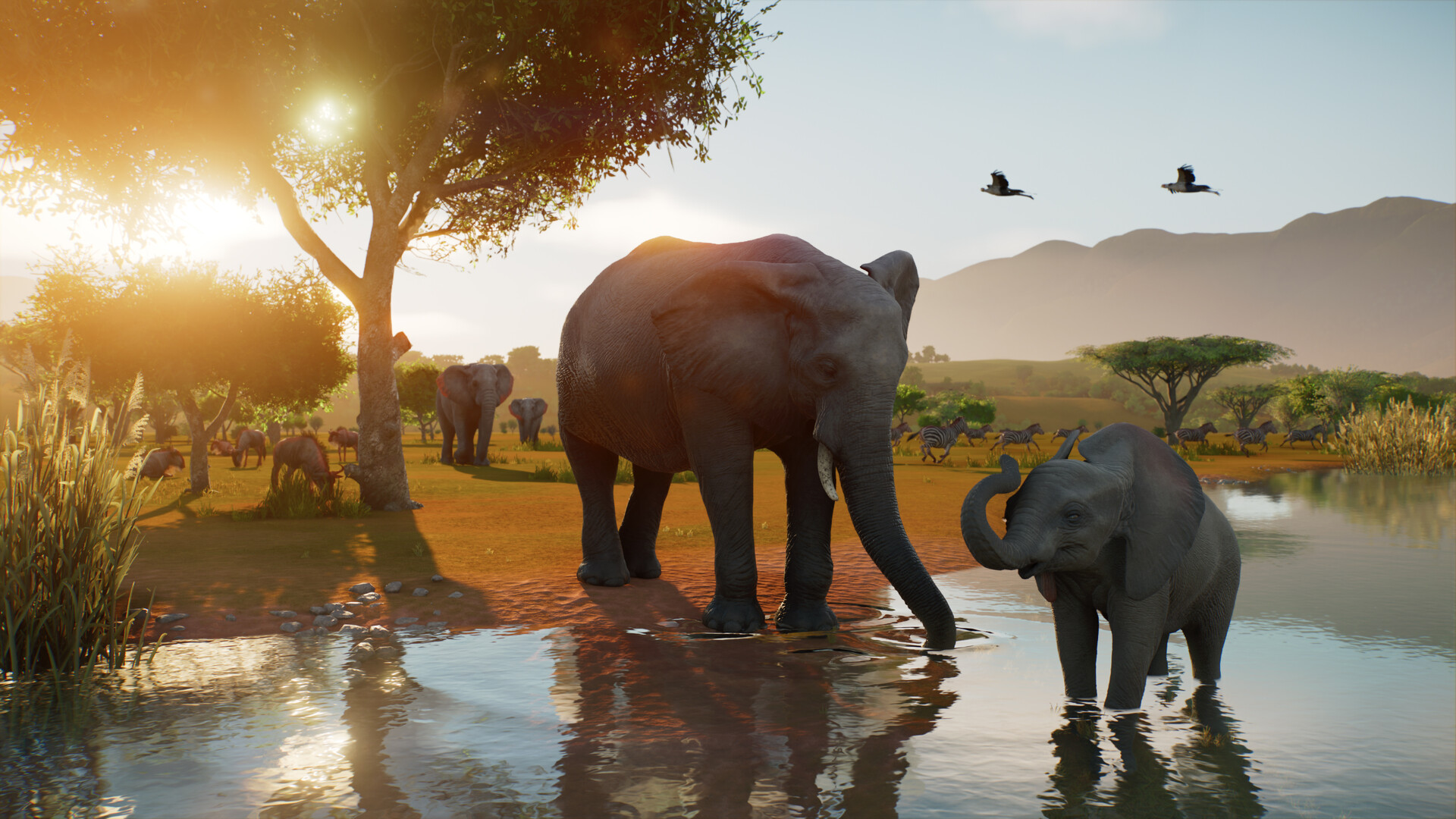
Terrestrial
Standard land habitat enclosed by a closed barrier loop with a staff gate. Lions, tigers, elephants, giraffes, zebras, primates, bears, wolves, and most of the launch roster live here. Each terrestrial habitat runs the welfare check that combines grade, height, terrain, social group, and enrichment.
Flying (aviary)
Same barrier loop as a terrestrial habitat but with a roof. Toco Toucan, Great Hornbill, Secretarybird, White-Tailed Sea Eagle, Golden Eagle, Eurasian Bittern, Greater Flamingo, Javan Green Magpie, Long-Eared Owl, Shoebill, and White-Backed Vulture.
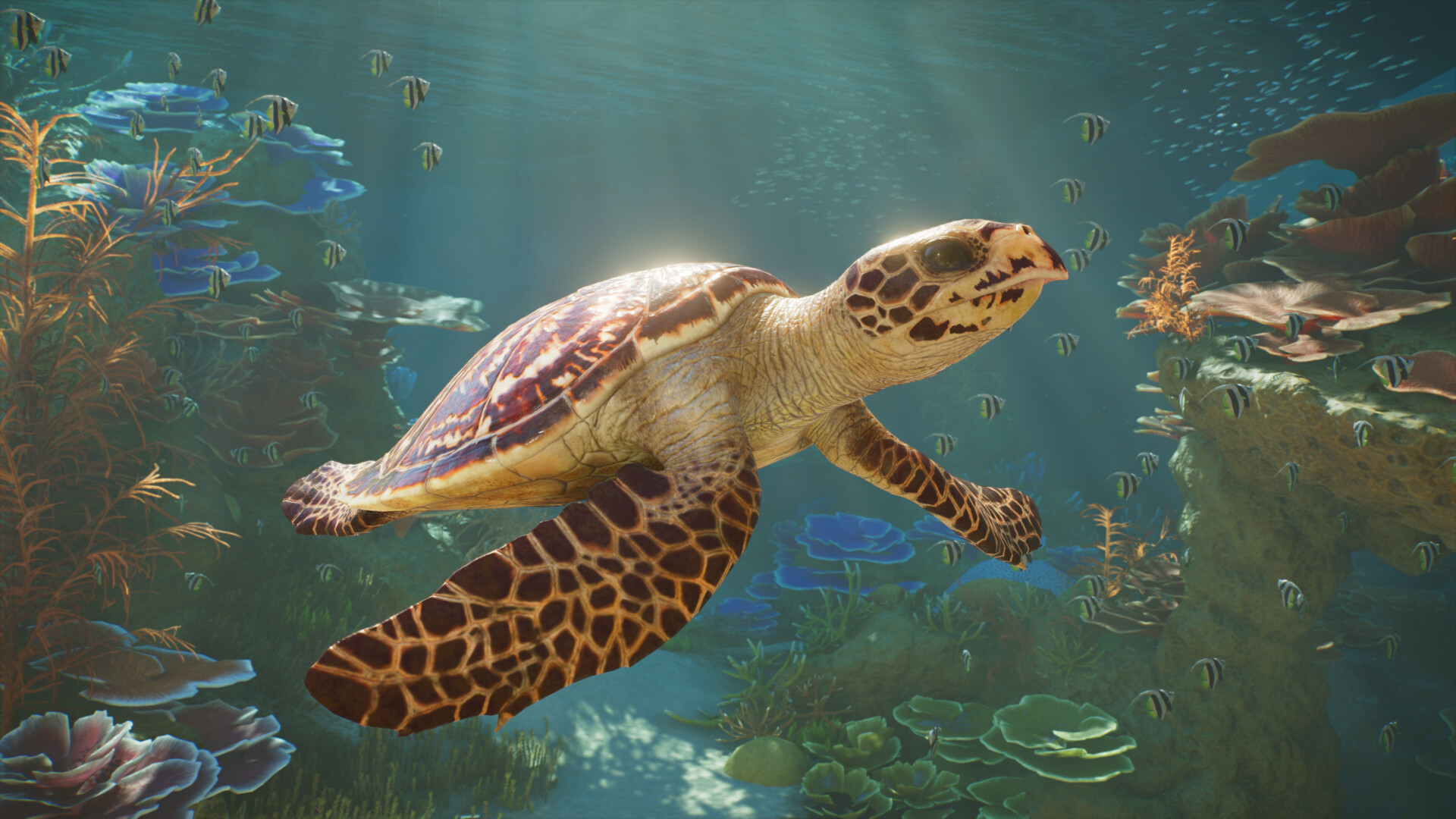
Aquarium
Built around water, uses water barriers, supports fresh, salt, and brackish water, and runs a three-stage filter network. Sharks, turtles, rays, large fish, schooling species, and the West Indian Manatee.
Exhibit
Walk-through glass-front enclosures for small animals: Axolotl, Fire Salamander, Boa Constrictor, Yellow Anaconda, Desert Horned Viper, Eastern Brown Snake, Gila Monster, Mexican Redknee, Amazonian Giant Centipede, Monarch butterfly, and Moon Jelly.
The five families of Planet Zoo 2 habitat requirements
- Barrier grade and height
- Graded 1 to 4, heights from 0.5 m to 3 m. 12 species need climb-proof barriers.
- Terrain
- Dig/Raise, Flatten to Foundations, Flatten to Surface, Smooth, Terrace, and 5 Terrain Shapes. Grass (short/tall), Long Grass, Dirt (light/heavy), Rock (smooth/rough), Sand (fine/coarse), Snow.
- Water depth
- Each aquarium species has a preferred column depth. Surface species such as Blacktip Reef Sharks cruise near the surface; Great Hammerheads prefer deeper water.
- Temperature
- Every species has a tolerance. Planet Zoo 2 introduces seasons on a 60-real-time-minute year, so heaters must sit on a maintained power network for cold-sensitive species.
- Cleanliness and integrity
- Barrier degradation heat map; neglected aquarium barriers in particular can spring a leak. Heavier reinforced glass resists cracking better than lighter wood.
Building tips for each Planet Zoo 2 habitat type
Lay the barrier loop
Lay a closed loop of barriers before placing staff gates, staff facilities and food. The game will not register an open perimeter as a valid habitat.
Check the species' Zoopedia entry
Check the Info Panel and Zoopedia entry for every species before finalising the layout, because each species lists its required terrain type, preferred grass height, water depth or flyable area, temperature tolerance, and barrier grade.
Add arboreal enrichment
Place climbing frames, hammocks, branches and elevated platforms for arboreal and feline species so guests see climbing behaviour.
Favour vertical over wide for aquatic and flying
For aquatic and flying habitats favour vertical depth and height over wide footprints, because welfare is driven by the volume the animal can actually use (water column for fish, flight space for birds).
Inspect the heat map
Habitats degrade over time and barrier condition is shown on a heat map; neglected aquarium and aviary structures can crack, so schedule regular keeper inspections.
Aim for the Prospering state
Every species has an optional higher Prospering welfare state that requires research into the species' wild needs and rewards longer lifespans and higher guest donations.
Maintenance to keep Planet Zoo 2 habitat welfare high
Schedule keeper inspections on the same shift as staff gate maintenance, so barrier condition is reviewed together with the welfare check. Assign keepers, vets, caretakers, mechanics and educators to Work Zones that overlap each habitat. Short Work Zones reduce staff travel time and stop staff quitting. Heavier barrier materials resist cracking better than lighter ones. For aquariums, reinforce glass; for aviaries, use climb-proof barrier grades for the 12 species that need them.
Where the Planet Zoo 2 habitat requirements end and species specifics begin
The five families of Planet Zoo 2 habitat requirements apply to every species. The species-specific layer — preferred grass height, water column depth, flyable area, social group size, enrichment preferences, and breeding pair compatibility — sits on top of the requirements and is listed in the Zoopedia entry for each species. Reading the Zoopedia entry is the fastest way to lock in the per-species layer without missing a constraint.
FAQ
How many habitat types does Planet Zoo 2 have?
Four. Terrestrial, Flying (aviary), Aquarium, and Exhibit. Every habitat is gated by the same five families of requirements: barrier grade and height, terrain, water depth or flyable area, temperature, and cleanliness and integrity.